
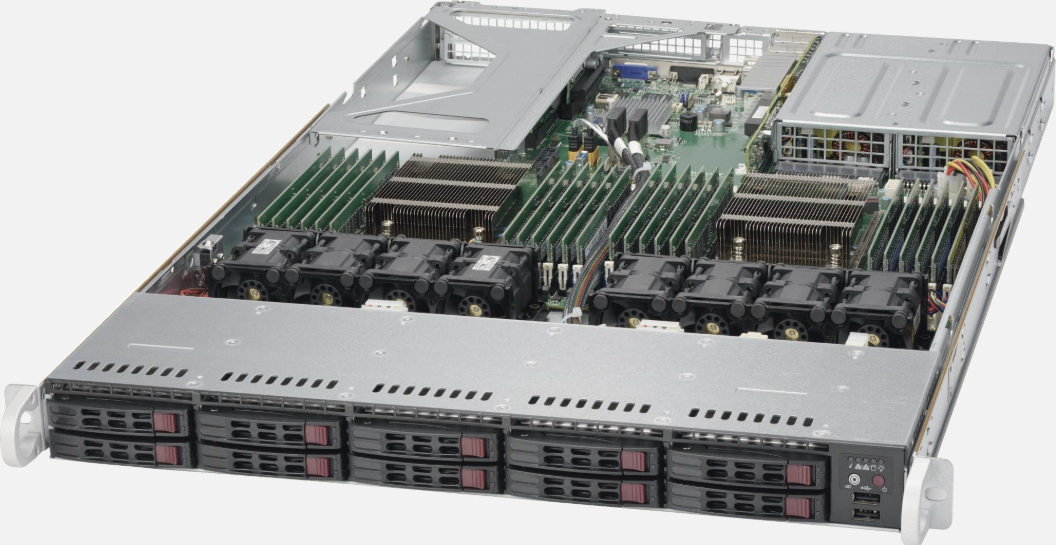
One of the most important components in the online world is the humble dedicated server. It may come in many shapes and forms, featuring different hardware specs and capabilities, but its core role remains the same. A dedicated server is a physical machine leased to a single customer with full access to the available hardware and is not shared with anyone else. This deployment model is much more flexible than a shared hosting plan or a standard virtual instance.
Key Points
- A dedicated server is a physical machine leased entirely to a single client without shared resources.
- It offers maximum performance and flexibility compared to shared hosting environments.
- Users have full control over the operating system, kernel updates, and disk encryption.
- With full access comes complete responsibility for configuration and system security.
- Dedicated servers are the ideal choice for massive enterprise projects that exceed standard virtualization limits.
What are the Advantages of a Dedicated Server?
Because a dedicated server is the actual physical machine connected directly to the internet, it provides unparalleled performance. Another distinct advantage is the complete choice of the installed operating system, allowing for custom kernel installation or deep system changes without any virtualization restrictions. Before deciding on your infrastructure, it is highly recommended to compare your project requirements by analyzing vps vs dedicated server advantages to choose the right fit for your business.
Compared to a standard virtual server, you have full access to everything. At the same time, you carry full responsibility for the changes you make, including drive encryption, installing bleeding-edge kernels, and custom software stacks. Since our platform provides unmanaged services, having total control over a physical machine means you are fully in charge of managing the operating system and its internal security policies, while the host ensures network connectivity remains stable.
When Should You Choose a Physical Server?
Overall, a physical machine is the closest to true raw performance and stands as the number one choice for large-scale projects. When your data demands exceed the limits of a shared hosting package or a standard virtual instance, scaling up to specialized physical infrastructure becomes necessary. It allows for optimized data processing and ensures that your application has exclusive access to the underlying hardware components without noisy neighbors.


